.png)
Keratosis Pilaris: More Than Just Rough Skin
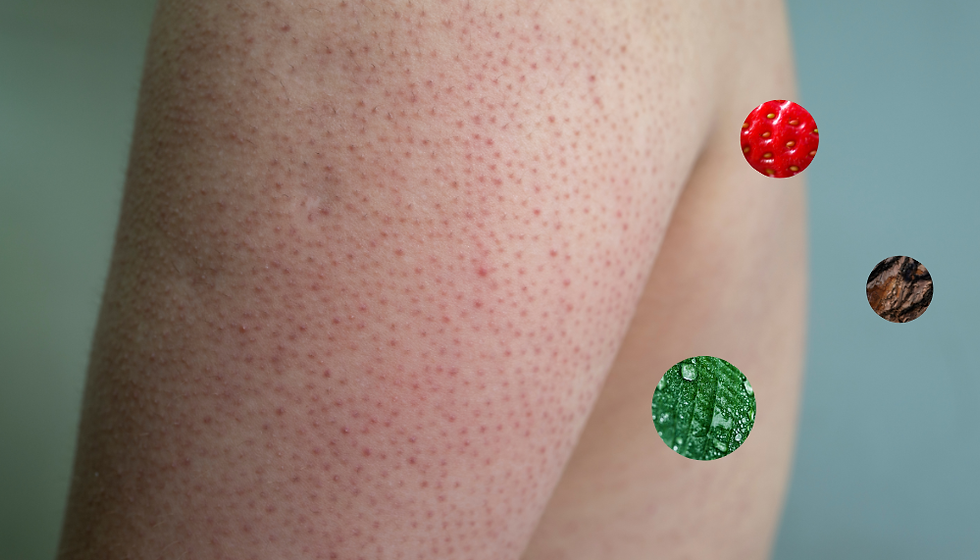
Keratosis pilaris (KP) is one of the most common yet misunderstood skin conditions. Often presenting as rough texture on areas like the arms, thighs or buttocks, it is medically harmless and can be frustrating to live with.
Frequently dismissed as dry skin and treated with simple moisturisers or harsh exfoliation, it can persist despite consistent care. For many people, this can lead to a cycle of over-treating the skin, increasing irritation without addressing the underlying texture. As awareness of skin comfort and barrier-friendly care grows, there is increasing recognition that KP requires gentle, sustained support rather than quick or aggressive fixes.
What we know
KP is a disorder where keratin builds up and blocks hair follicles, sometimes trapping hairs and causing rough, bumpy skin appearance 1.
KP is linked to abnormalities in the pilosebaceous unit which is the hair follicle's structural unit, comprised of the hair follicle and its associated sebaceous gland and arrector pili muscle 2.
KP commonly begins in childhood or adolescence and can affect up to 50–80% of adolescents and ~40% of adults, with notable impacts on skin confidence and quality of life 3.
Industry impact and potential
KP presents a clear opportunity for skincare innovation beyond basic moisturisation and exfoliation:
Barrier-first formulations: Products that support barrier repair alongside gentle keratolysis to improve texture without irritation.
Smarter exfoliation systems: Balanced use of acids, urea and moisturising ingredients to smooth skin without causing irritation over time.
Combination approaches: Using exfoliation, hydration and follicle-focused care rather than relying on single solutions.
Education-led care: Setting realistic expectations, as KP often requires sustained, consistent management rather than quick fixes.
Our position
At Sequential, we help brands look beyond surface smoothing claims and understand how their products actually affect the skin barrier and hair follicles in real-world use. By combining microbiome profiling with molecular, metabolomic and multi-omic analysis, we can assess how products influence skin texture, keratin build-up and skin barrier resilience over time. Using our global database of 50,000+ samples, we can support the development of evidence-led formulations that target the biological drivers of KP rather than short-term cosmetic appearance alone.
References
Hwang, S. et al. (2008). Keratosis pilaris: a common follicular hyperkeratosis. Cutis, 82, 177–180.
Reddy, S. et al. (2021). Role of acids, steroids and kinase inhibitors in keratosis pilaris. Cureus, 13, e18917.
Wang, J. et al. (2018). Keratosis pilaris and therapeutic options. Am J Clin Dermatol, 19, 733–757.


Comments